
Turn any web page into clean, readable files
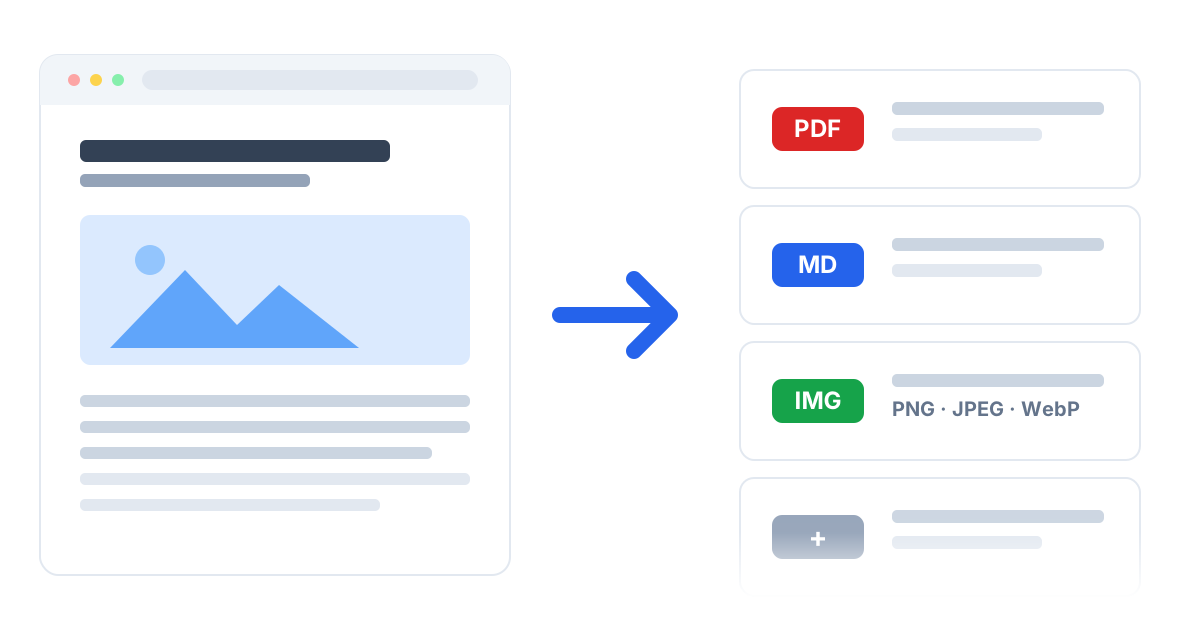
Web to File saves readable web content without ads, sidebars, or page clutter. Export as PDF, Markdown, or image — everything is processed locally in your browser. Free, no account, no tracking.
Features
Three export modes. Five file formats.
Choose how much of the page to keep, then save it in the format you need.
Full Page mode
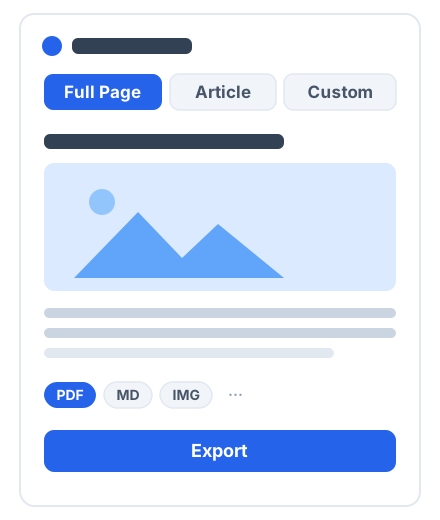
Captures the page as it is rendered, from top to bottom. Useful for dashboards, documentation, and pages where layout matters.
Article mode
Extracts the readable article — title, text, and images — and leaves out ads, navigation, and sidebars. Suited to news articles and blog posts.
Custom mode
Select the content blocks you want, reorder and refine them, and export your own version of the page.
PDF, Markdown & image export
Save as PDF for reading and sharing, Markdown for notes and archives, or a full-length PNG, JPEG, or WebP screenshot. More formats are planned.
Private by design
Pages are processed entirely on your device. There are no analytics and no tracking, and no data leaves your browser.
Export history & viewer
Past exports are kept in a local history with a built-in viewer, so you can reopen or download them again at any time.
From page to file in three steps.
Step 1: Install
Add Web to File to Chrome from the Chrome Web Store. There is nothing to sign up for or configure.
Step 2: Pick a mode
Open the side panel on the page you want to save and choose Full Page, Article, or Custom. Preview and adjust the content before exporting.
Step 3: Export
Choose PDF, Markdown, or an image format. The file is generated locally and saved to your Downloads folder.
Done!
Use cases
What people save pages for
A few of the ways Web to File fits into everyday work.
Save long articles as clean PDFs to read later — on a flight, a tablet, or an e-reader.
Export pages as Markdown that drops straight into Obsidian, Notion, or any notes app, with the source URL attached.
Keep a permanent local copy of pages that may change or disappear, in a format you control.
FAQ
Frequently Asked Questions
Short answers about privacy, formats, and permissions. There is more detail on the FAQ page.
Is my page content uploaded anywhere?
No. Extraction, conversion, and file generation all happen locally in your browser. Web to File has no backend servers and sends no webpage content, files, or browsing data anywhere.
Which file formats are supported?
PDF and Markdown for documents, plus full-length PNG, JPEG, and WebP screenshots. More formats are planned.
Is it free?
Yes. Web to File is free to install and use, with no account and no in-app purchases.
Why does it need the permissions it asks for?
Each permission maps to a user-visible feature: script injection extracts content when you start an export, the downloads permission saves your files, and the debugger API renders PDFs and screenshots — only during exports you trigger. Details are on our privacy page.
Get Web to File for Chrome
Free on the Chrome Web Store. It works on articles, documentation, dashboards — any page you can open in your browser.